Meditation (Dhyāna)
Cultivating Steady Awareness and Inner Clarity
Meditation is a central pillar of the yogic path and one of the most studied mind–body practices in modern science. In the yogic tradition, dhyāna is a state of sustained, effortless awareness in which the mind becomes steady, clear, and quiet, allowing deeper insights into one's own nature.
At Nirog Yoga University, meditation is taught not as a vague relaxation technique, but as a structured discipline rooted in classical texts and supported by contemporary research in psychology, neuroscience, and medicine.
How to Start Meditation (Beginner Guide)
A simple, safe, and effective way to begin
Meditation doesn't need special skills, equipment, or prior experience. What matters is consistency and a gentle approach. Here's the easiest roadmap for students and newcomers:
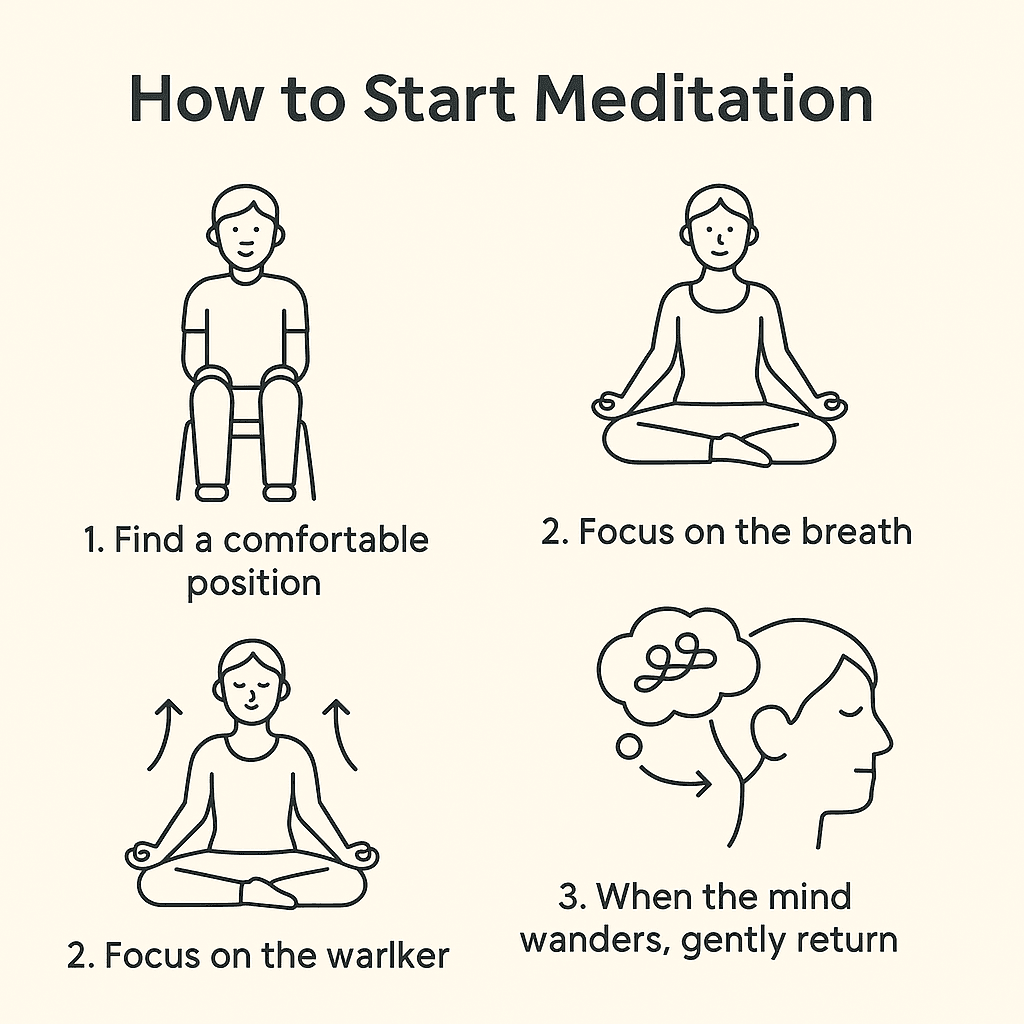
1. Start with Just 5 Minutes
Don't aim for 20–30 minutes in the beginning. 5 minutes is enough to build the habit. You can slowly increase it to 10, 15, or 20 minutes as it becomes natural.
2. Choose a Comfortable Position
You can meditate:
- sitting on a chair
- on a cushion
- on a yoga mat
- or even on your bed (but sitting upright)
The spine should be comfortably straight, not stiff. If sitting cross-legged is uncomfortable, avoid it.
3. Focus on the Breath (Easiest Method)
Gently bring attention to:
- the cool air entering your nose
- the warm air leaving
- the rise/fall of your chest or belly
Do not try to "control" the breath. Just observe it.
4. Expect the Mind to Wander — It's Normal
You will think about work, family, groceries, random thoughts. This is natural.
When you notice wandering, gently bring your attention back to the breath. This "returning" is the actual meditation skill.
5. Keep the Face, Jaw, and Shoulders Relaxed
Tension often hides here. Check in every few minutes and soften these areas.
6. Use a Simple Anchor
Beginners may use:
- Breath (most common)
- A mantra like "So–Hum" or simply "Om" silently
- A point between the eyebrows
- A candle flame (for trataka meditation)
Choose what feels natural.
7. Set a Soft Timer
Use a timer with a gentle bell. This frees your mind from constantly checking the time.
References & Further Reading
- Research on mindfulness and attention (selected reviews)
- Traditional texts discussing samādhi and dhyāna
- Clinical papers on meditation and health outcomes
📖 Additional Resources
Patanjali Yoga Sutras
Conceptual foundation for dhyāna, samādhi, and mental discipline.
Read Summary →