Breathing Control Techniques
Prāṇāyāma Variants: A Comprehensive Overview for Students & Practitioners
Breathing control in yoga is not accidental — it is a deliberate, scientific method to regulate the autonomic nervous system, balance prāṇa, and prepare the mind for deeper practices like meditation. Below are the major categories and techniques of yogic breath control, explained with precision and purpose.
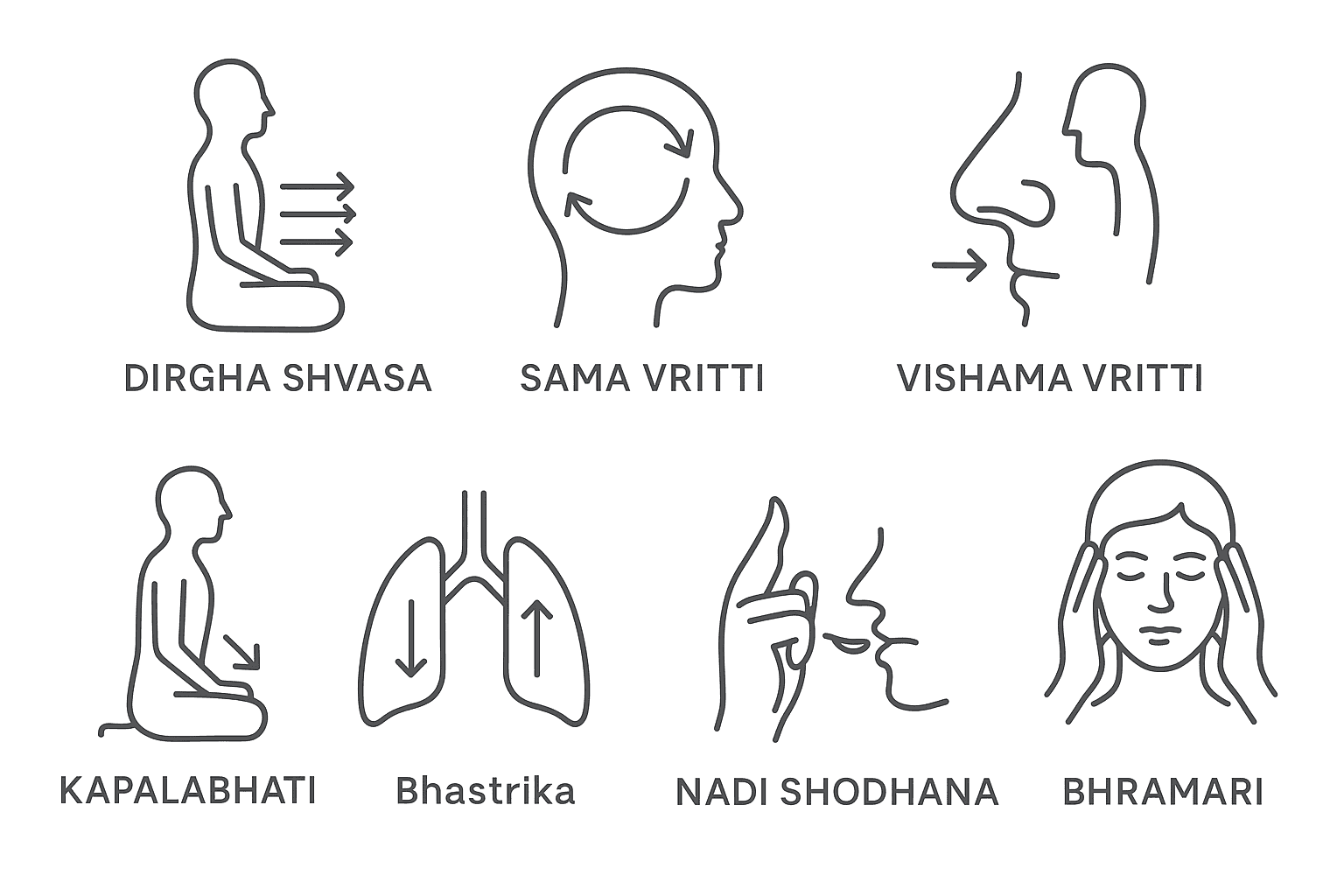
1. Foundational Techniques Beginner Level
These build awareness, steadiness, and baseline lung capacity.
1.1 Dirgha Shvāsa — Deep Yogic Breathing (3-Part Breath)
Focus: Chest → ribs → abdomen expansion
Benefits:
- Improves lung function
- Reduces anxiety
- Ideal warm-up before all pranayamas
Use for beginners:
Helps students understand diaphragmatic breathing.1.2 Sama Vritti — Equal Ratio Breathing
Pattern: Inhale = Exhale (e.g., 4 seconds in, 4 seconds out)
Benefits:
- Balances sympathetic & parasympathetic systems
- Increases mental steadiness
Use:
Best for students with stress, restlessness, or shallow breathing.1.3 Vishama Vritti — Unequal Ratio Breathing
Pattern: Exhale longer than inhale (e.g., 4 in → 6 out)
Benefits:
- Deep relaxation
- Reduces heart rate
- Helps with insomnia
Use:
Evening practice & pre-meditation calming.2. Cleansing & Energizing Techniques Intermediate
These activate prāṇa, improve circulation, and energize the system.
2.1 Kapalabhati — Skull-Shining Breath
Pattern: Active exhale (quick, sharp) + Passive inhale
Benefits:
- Clears sinuses
- Stimulates digestion
- Activates solar plexus (Manipura chakra)
- Increases alertness
Caution:
Avoid in hypertension, pregnancy, hernia.2.2 Bhastrika — Bellows Breath
Pattern: Forceful inhale + forceful exhale with equal intensity
Benefits:
- Strong energy booster
- Improves lung power
- Warms the body
Caution:
Not for anxiety-sensitive individuals or cardiac conditions.3. Cooling Techniques (Therapeutic Use)
3.1 Sheetali — Cooling Tongue Breath
Pattern: Roll tongue → inhale through the tube → exhale through nose
Benefits:
- Reduces heat
- Helps anger, acidity, hot climates
3.2 Sheetkari — Hissing Breath
Pattern: Teeth slightly open → inhale through teeth → exhale through nose
Benefits:
- Similar cooling effect
- Useful when tongue cannot be rolled
3.3 Chandra Bhedana — Left Nostril Breathing
Pattern: Inhale left → exhale right
Benefits:
- Calms, cools, lowers heart rate
- Good for anxiety and insomnia
References & Suggested Reading
- Iyengar, B. K. S. (2005). Light on Yoga.
- Brown, R. P., & Gerbarg, P. L. (2005). Sudarshan Kriya Yoga.
- Articles from Journal of Alternative and Complementary Medicine.
📖 Additional Resources
Pranayama (Breath Regulation)
Comprehensive guide to classical pranayama techniques and practice.
Learn Pranayama →Meditation (Dhyāna)
Use breathing techniques as a foundation for meditation practice.
Explore Meditation →Practice Curriculum
Structured progression of breathing practices from beginner to advanced.
View Curriculum →