Introduction to Prāṇāyāma
The Science of Breath Regulation in Yogic Tradition
Prāṇāyāma is one of the most essential and sophisticated components of the yogic system. Rooted deeply in classical texts and validated by modern physiology, it represents the conscious regulation of breath to influence the flow of prāṇa — the vital life force that sustains the body and mind.
The term Prāṇāyāma combines prāṇa (life force or vital energy) and āyāma (to expand, control, or regulate). Thus, pranayama is not merely breathing exercise; it is a deliberate method to expand one's inner vitality and harmonize the autonomic nervous system, leading to stability of body, clarity of mind, and emotional balance.
Historical and Scriptural Foundations
Prāṇāyāma is extensively referenced across yogic literature:
1. Patanjali's Yoga Sutra (2.49–2.53)
Patanjali places pranayama as the fourth limb of Ashtanga Yoga, after mastery of asana. He describes it as the controlled regulation of inhalation (puraka), exhalation (rechaka), and retention (kumbhaka), leading to steadiness of the mind and preparation for meditation.
2. Hatha Yoga Pradipika
Svatmarama dedicates an entire chapter to pranayama, describing techniques such as Nadi Shodhana, Bhastrika, Kapalabhati, and Ujjayi. The text emphasizes purification of the nadis (energy channels) and regulation of internal heat and pranic flow.
3. Gheranda Samhita & Shiva Samhita
These texts elaborate on preparatory cleansing techniques (shatkarmas) and advanced pranayama practices that influence the subtle body.
These sources establish pranayama as both a physical discipline and a subtle mental practice.
Scientific Basis and Physiological Relevance
Modern research highlights measurable effects of pranayama on the human system:
1. Autonomic Nervous System Regulation
Slow, rhythmic breathing increases parasympathetic (rest-and-digest) activity and reduces sympathetic (fight-or-flight) arousal.
- Harvard Medical School (2020) shows pranayama improves vagal tone and heart-rate variability (HRV).
- AIIMS New Delhi reports reductions in stress markers such as cortisol.
2. Improved Respiratory Efficiency
Pranayama increases lung capacity, strengthens respiratory muscles, and enhances oxygen utilization.
- Journal of Clinical and Diagnostic Research (2019) notes improved FEV1, FVC, and breath-holding capacity.
3. Cardiovascular Benefits
Moderate pranayama reduces blood pressure, improves circulation, and supports cardiac function.
- NIH – NCCIH (2021) confirms benefits for hypertension and heart-rate reduction.
4. Cognitive and Emotional Effects
Slow breathing techniques enhance attention, working memory, and emotional regulation.
- Frontiers in Psychology (2020) links pranayama to improved prefrontal cortex activity.
- Sleep Science (2020) documents better sleep quality.
5. Metabolic and Endocrine Impact
Evidence suggests improved glucose metabolism, reduced inflammation, and hormonal balance — particularly beneficial for diabetes and lifestyle disorders.
Core Components of Prāṇāyāma
Pranayama consists of structured phases and techniques, each serving a defined purpose:
The Three Phases of Breath
Controlled inhalation
Retention (internal or external)
Controlled exhalation
Extended exhalation and retention are associated with deeper autonomic regulation.
The Complete Breath Cycle
The pranayama breath cycle consists of four distinct phases, each with specific physiological effects:
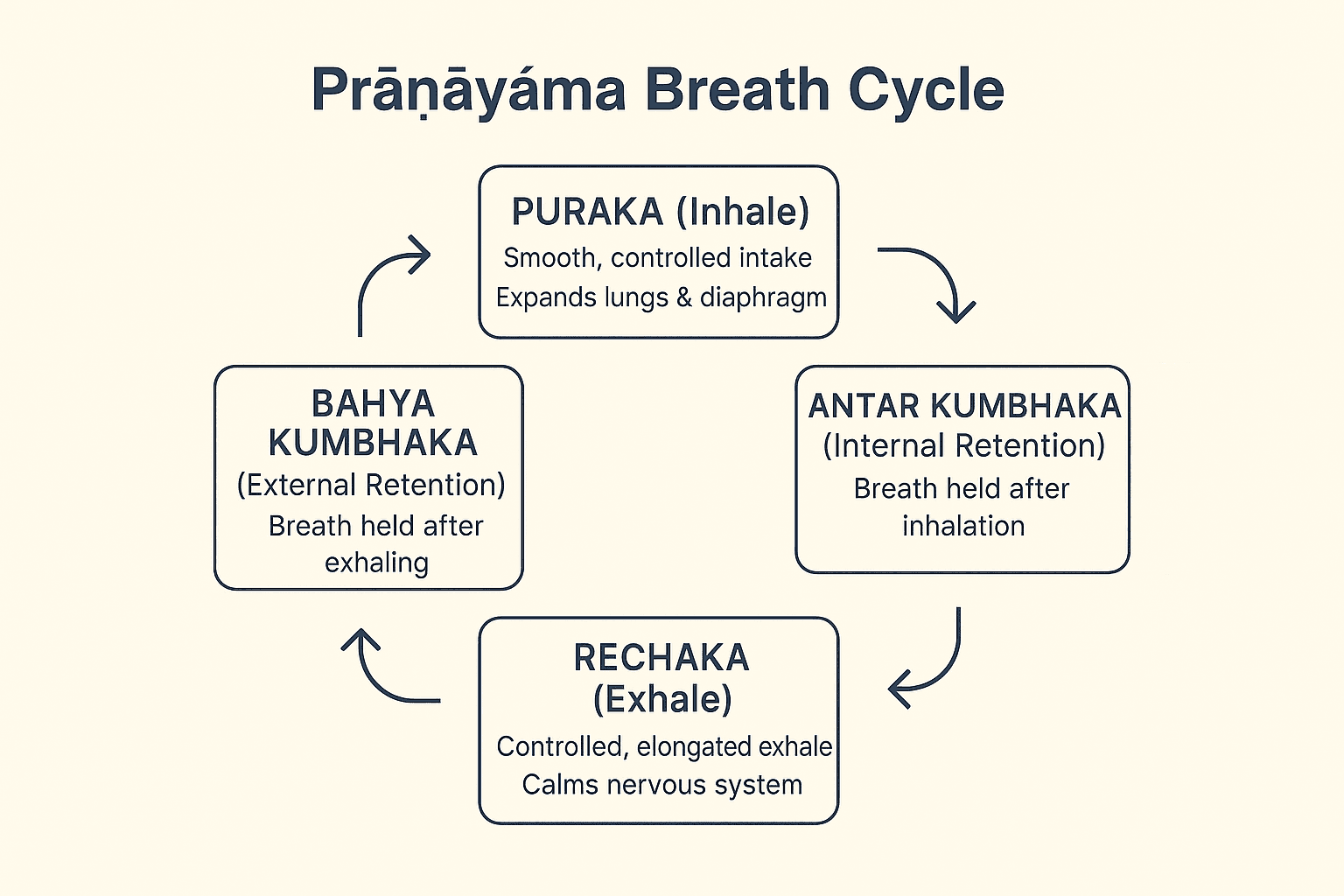
Four-Phase Breath Cycle
Action: Smooth, controlled intake — expands lungs & diaphragm
Effect: Activates energy, expands chest, oxygenates blood
Action: Breath held after inhalation
Effect: Suspends breath, increases pranic pressure, enhances oxygen absorption
Action: Controlled, elongated exhale
Effect: Releases tension, calms sympathetic activity, removes carbon dioxide
Action: Breath held after exhaling
Effect: Deep parasympathetic activation, profound stillness, prepares for next cycle
Major Categories of Prāṇāyāma
📖 Additional Resources
Breathing Techniques
Practical breath-control drills and foundational training methods.
Practice Techniques →Safety Guidelines
Rules and modifications for safe practice across asana and breathwork.
View Guidelines →Practice Curriculum
A structured 8-week to 1-year plan: asana, pranayama, and meditation.
View Curriculum →