Piñcha Mayurāsana (Feathered Peacock)
A majestic and powerful forearm balance that represents the beauty and poise of a peacock's tail.
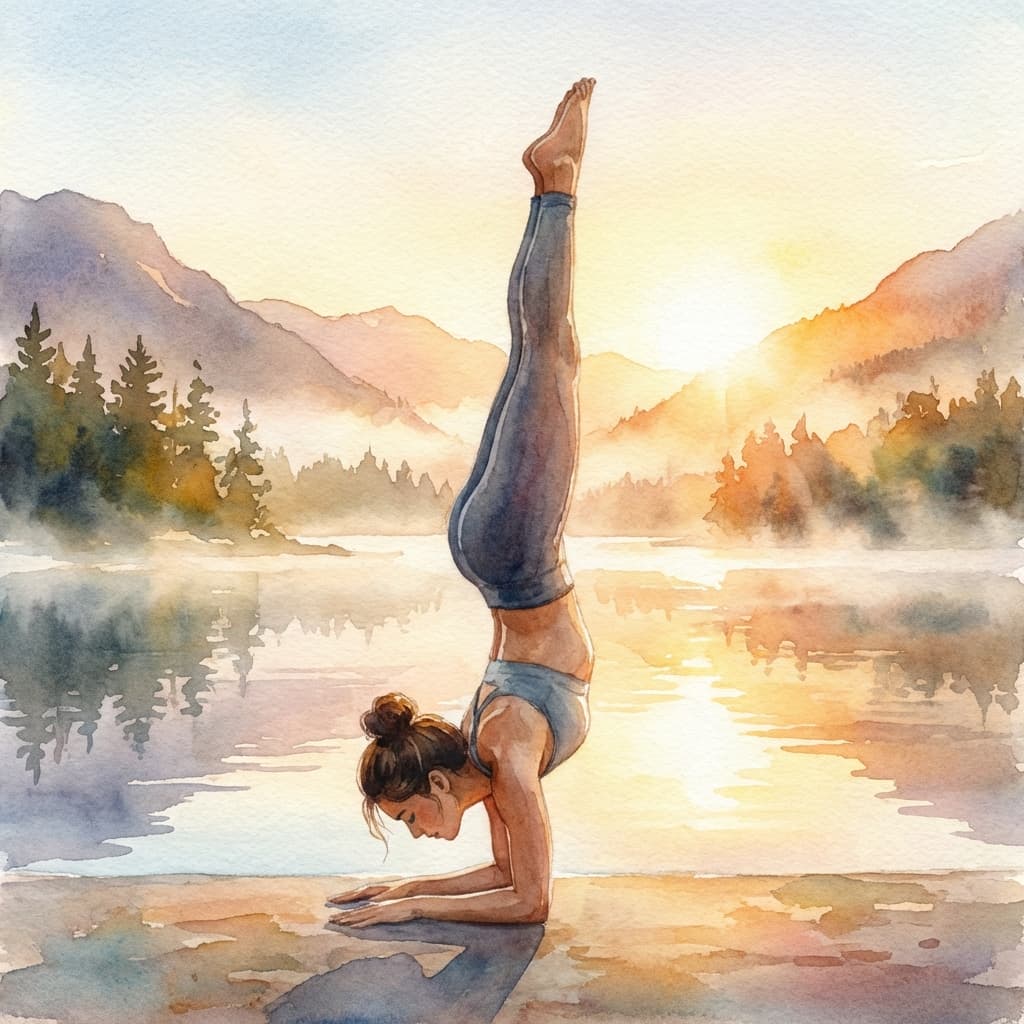
Introduction
Piñcha Mayurāsana (Feathered Peacock Pose) is an advanced inversion and arm balance. The name comes from the Sanskrit words piñcha meaning "feather", mayura meaning "peacock", and āsana meaning "posture". It requires significant shoulder stability, core strength, and mental focus. Unlike Head stand, the weight is entirely supported by the forearms, protecting the neck but increasing the challenge for the upper body.
Key Benefits
- Upper Body Strength: Builds immense strength in the shoulders, arms, and upper back.
- Core Stability: Deeply engages the abdominal muscles to maintain vertical alignment and balance.
- Mental Focus: Improves concentration and balance, fostering a sense of poise and grace under pressure.
- Circulation: As an inversion, it improves blood flow to the brain and revitalizes the internal organs.
- Stress Relief: Calms the mind and helps alleviate minor stress and anxiety through focused effort.
Contraindications & Precautions
⚠️ Important Safety Notes
Piñcha Mayurāsana is an advanced pose. Avoid it if you have:
- High blood pressure
- Heart conditions
- Shoulder, neck, or back injuries
- Headaches or migraines
- Ear or eye infections (due to increased pressure)
- Menstruation (traditionally avoided for deep inversions)
Note: Beginners should practice against a wall or under the supervision of an experienced teacher.
How to Perform (Step-by-Step)
- Prepare the BaseStart on your hands and knees. Place your forearms on the mat, parallel to each other, shoulder-width apart. Spread your fingers wide and press your palms firmly down.
- Dolphin PoseTuck your toes and lift your hips high, coming into a Dolphin Pose. Walk your feet toward your elbows as far as comfortable, keeping your spine long.
- Lift One LegInhale and lift one leg high toward the ceiling. Keep your gaze between your forearms, slightly ahead of your wrists.
- Kick UpExhale, bend the knee of the bottom leg, and gently hop up. Use your core to lift both legs vertically. Imagine your body forming a straight line from elbows to toes.
- Balance and BreatheEngage your thighs and point your toes. Push actively through your forearms to stay light in the shoulders. Hold for 30–60 seconds while breathing steadily.
- ReleaseTo come down, lower one leg at a time with control. Rest in Balasana (Child’s Pose) for a few moments to normalize your blood flow.