Surya Namaskara
A Comprehensive Study of the Yogic Sun Salutation Sequence
Surya Namaskara, commonly known as the Sun Salutation, is one of the most complete and transformative practices in yoga. Traditionally performed at sunrise, it is both a physical sequence and a meditative ritual that expresses gratitude to Surya — the solar energy that sustains life. Rooted in ancient yogic wisdom and supported by modern physiological research, Surya Namaskara is widely taught in universities, wellness institutes, and yoga therapy programs.
It integrates asana, pranayama, mantra, and mindfulness, making it a multidimensional discipline that benefits both beginners and advanced practitioners.
Historical and Yogic Foundations
The origins of Surya Namaskara are referenced across classical and medieval traditions:
- Vedic Literature describes rituals honoring the Sun as a symbol of vitality, clarity, and consciousness (Aditya Hṛdayam, Rig Veda hymns).
- Hatha Yoga Texts such as Hatha Yoga Pradipika and Gheranda Samhita emphasize dynamic practices that purify nadis, stimulate prana, and prepare the body for higher yoga.
- Modern Yoga Lineages (Bihar School of Yoga, Mysore/Ashtanga School, Kaivalyadhama) systematized Surya Namaskara into structured sequences for teaching and research.
Throughout history, Surya Namaskara evolved into a practical tool for preparing the body, focusing the mind, and awakening energy.
Why Surya Namaskara Is Unique
Surya Namaskara is considered a "master practice" because it simultaneously influences:
1. Musculoskeletal System
- Mobilizes the spine in flexion & extension
- Strengthens core, legs, arms, hips, shoulders
- Enhances flexibility of hamstrings, back, and chest
- Activates all major muscle groups
2. Cardiovascular & Respiratory Systems
- Elevates heart rate safely
- Improves lung efficiency
- Enhances oxygen uptake and circulation
- Increases stamina and metabolic rate
3. Nervous System & Stress Regulation
- Rhythmic movement + breath synchronisation induces parasympathetic balance
- Reduces cortisol and anxiety markers
- Enhances mental clarity, focus, and emotional regulation
4. Endocrine System
Stimulates major glands including:
- Thyroid (through neck extension in Bhujangasana)
- Adrenal glands (via back bends)
- Pancreas (via forward bends & compression)
- Reproductive system (via hip opening)
5. Energetic System (Pranic Flow)
- Activates Pingala Nadi (solar channel)
- Balances Pranamaya Kosha
- Enhances vitality and internal heat (Agni)
The 12-Step Classical Sequence (Hatha Tradition)
Below is the academically recognized 12-step classical version. Each movement corresponds to coordinated breath cycles:
Visual Sequence Overview
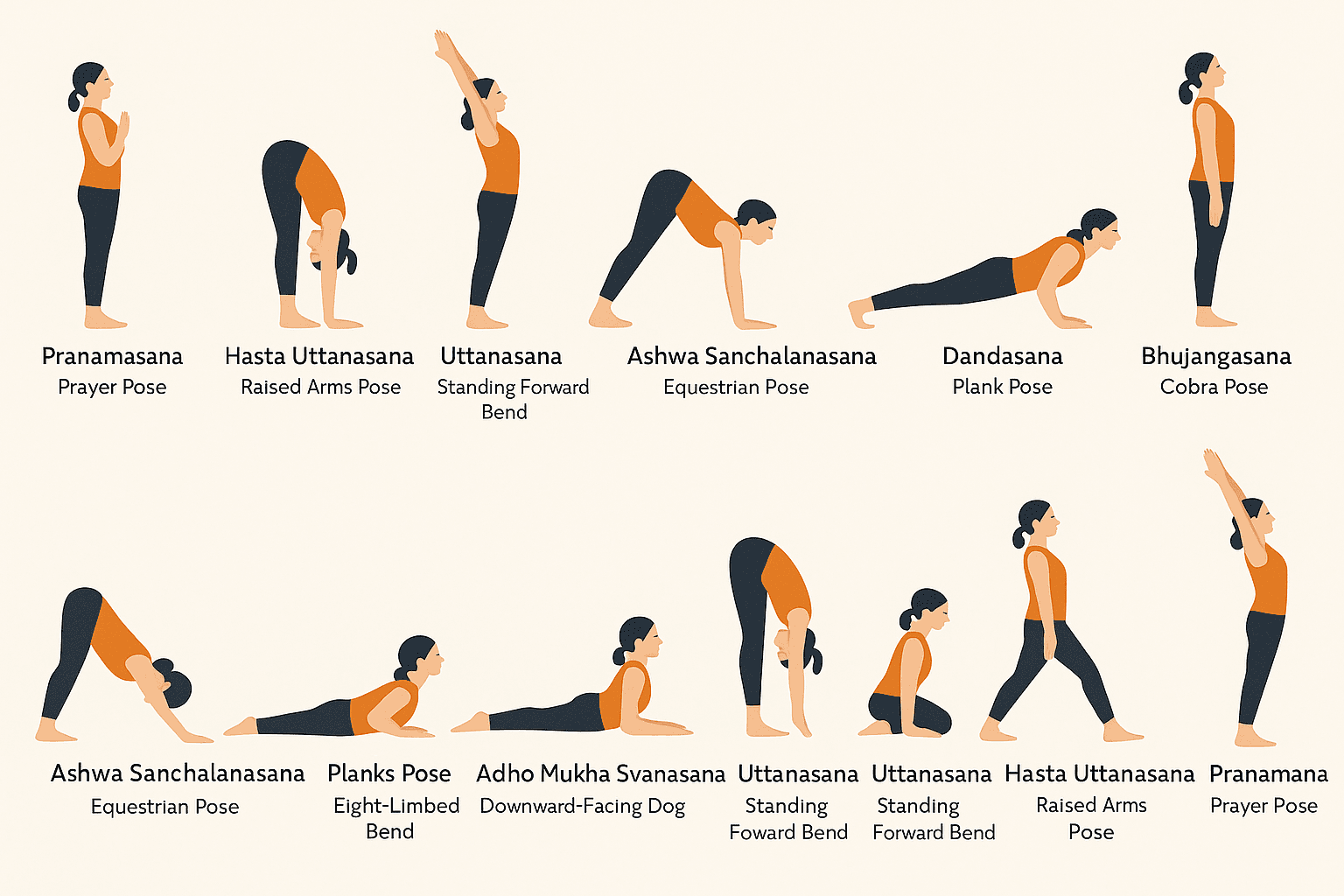
Detailed Step-by-Step Guide
- Establishes grounding
- Induces mental centering
- Expands chest
- Stretches abdomen & diaphragm
- Stimulates respiratory system
- Lengthens spine
- Compresses abdomen
- Improves digestion
- Opens hips
- Strengthens legs
- Improves balance
- Strengthens arms, wrists, core
- Prepares body for Chaturanga alignment
- Tones arms and shoulders
- Enhances spine flexibility
- Expands chest
- Activates spinal extensors
- Stimulates adrenal & thyroid glands
- Stretches hamstrings & calves
- Strengthens shoulders
- Improves circulation
- Opens second hip
- Improves symmetry
- Calms nervous system
- Restores spinal alignment
- Expands ribcage
- Re-energizes body
- Returns to balance
- Closes the cycle with awareness
Traditional Mantras (Optional in University Curriculum)
Each step can be synchronized with a Surya mantra such as:
- Om Mitraya Namaha
- Om Ravaye Namaha
- Om Suryaya Namaha
This adds a meditative and devotional dimension to the practice.
Scientific Evidence Supporting Surya Namaskara
1. Physical Health
- Improves muscle endurance and flexibility (Journal of Bodywork & Movement Therapies, 2016)
- Enhances BMI, lipid profile, and metabolic health in adults (International Journal of Yoga, 2015)
2. Cardiovascular Benefits
- Increases VO₂ max and improves aerobic capacity (Ayurveda Research & Education Foundation, 2018)
3. Endocrine & Metabolic Effects
- Enhances insulin sensitivity and reduces fasting glucose (Indian Journal of Endocrinology, 2017)
4. Mental Health
- Reduces anxiety, improves mood, and enhances cognitive functioning (Frontiers in Psychology, 2020)
Pedagogical Approach at Nirog Yoga University
Our teaching strategy includes:
- Proper alignment and biomechanics
- Breath synchronization
- Progressive variations (beginner → intermediate → classical)
- Safety guidelines for hypertension, pregnancy, vertigo, and spinal issues
- Use of props and modifications
- Integration with pranayama and meditation modules
Each student learns both practice and theory, enabling them to teach Surya Namaskara professionally.
Precautions & Contraindications
Surya Namaskara should be modified or avoided in:
- Uncontrolled hypertension
- Recent surgeries
- Severe back pain or herniated discs
- Pregnancy (traditional sequence is modified)
- Vertigo or dizziness
- Cardiac conditions (require slower pace)
Conclusion
Surya Namaskara is not just a warm-up routine — it is a structured, intelligent, and scientifically validated practice that harmonizes the entire human system. Its elegance lies in the seamless integration of movement, breath, awareness, and rhythm. Within the academic framework of Nirog Yoga University, Surya Namaskara forms a foundational pillar for physical conditioning, mental focus, and energetic awakening.