Care to Be Taken When Practicing Yoga & Upayoga
Safety · Alignment · Awareness · Progression
Yoga and Upayoga offer enormous benefits, but both require mindful practice. Whether you're a beginner, intermediate practitioner, or instructor, the following guidelines ensure safety, effectiveness, and long-term progress.
1Listen to Your Body (Most Important Rule)
- Yoga should never cause sharp pain.
- Stop immediately if you feel dizziness, numbness, or strain.
- Discomfort is okay; pain is not.
- Never force your body into a posture because others can.
2Warm Up Before Deep Movements
- Always prepare the joints and spine before forward bends, backbends, inversions, or balances.
- Upayoga practices (simple joint rotations, spinal movements, breath awareness) are excellent warm-ups.
3Sync Breath With Movement
- Breath should remain smooth, silent, and natural.
- If breath becomes jerky or fast, you're pushing too much.
- Never hold breath unless explicitly instructed (and even then, do so gently).
4Avoid Overstretching & Overflexing
- Do not push beyond 70–80% of your range.
- Stretching must be gradual; "no pain, only awareness."
- Upayoga especially focuses on gentle mobility, not deep stretches.
5Protect Your Spine
- Keep the spine long; avoid collapsing in forward bends.
- For backbends, lift the chest before bending.
- Engage the core in all standing and balancing postures.
6Avoid Yoga After Meals
- Maintain at least 2–3 hours gap after food.
- Upayoga can be done sooner than yoga but still avoid full stomach sessions.
7Contraindications for Certain Conditions
Avoid or modify yoga if you have:
- Uncontrolled blood pressure
- Acute back injuries or herniated discs
- Vertigo
- Pregnancy (for certain asanas)
- Severe knee injuries
- Cardiac issues
Upayoga, being gentler, is generally safer but still requires caution.
8Never Force Inversions or Backbends
- Headstand, shoulderstand, deep backbends need supervision.
- Avoid if you have neck issues, glaucoma, or high BP.
9Respect Individual Pace
- Progression is personal — no comparison.
- Beginners should focus on alignment and breathing, not achieving final pose shapes.
10Do Not Mix Multiple Methods Too Quickly
- Combining too many styles (e.g., Ashtanga + Power + Hatha + gym) can overstress the body.
- Ensure the instructor understands your background.
11End with Rest (Savasana or Upayoga Recovery)
- Helps integrate the practice.
- Prevents fatigue and overstimulation of the nervous system.
12Practice Under Guidance
- Yoga therapy, pranayama, bandhas, and mudras need trained instructors.
- Upayoga can be self-practiced, but initial correction is useful.
13Hydrate Before, Not During
- Sips are fine, but avoid drinking large quantities mid-session.
14Avoid Yoga During Illness or Fever
- Gentle Upayoga may be fine, but deep postures should wait.
- The body needs rest, not effort.
15Mental & Emotional Safety
- Some practices can surface emotions — this is normal.
- Stop if you feel overwhelmed; return when settled.
- Meditation, breathwork, or deep relaxation can be grounding.
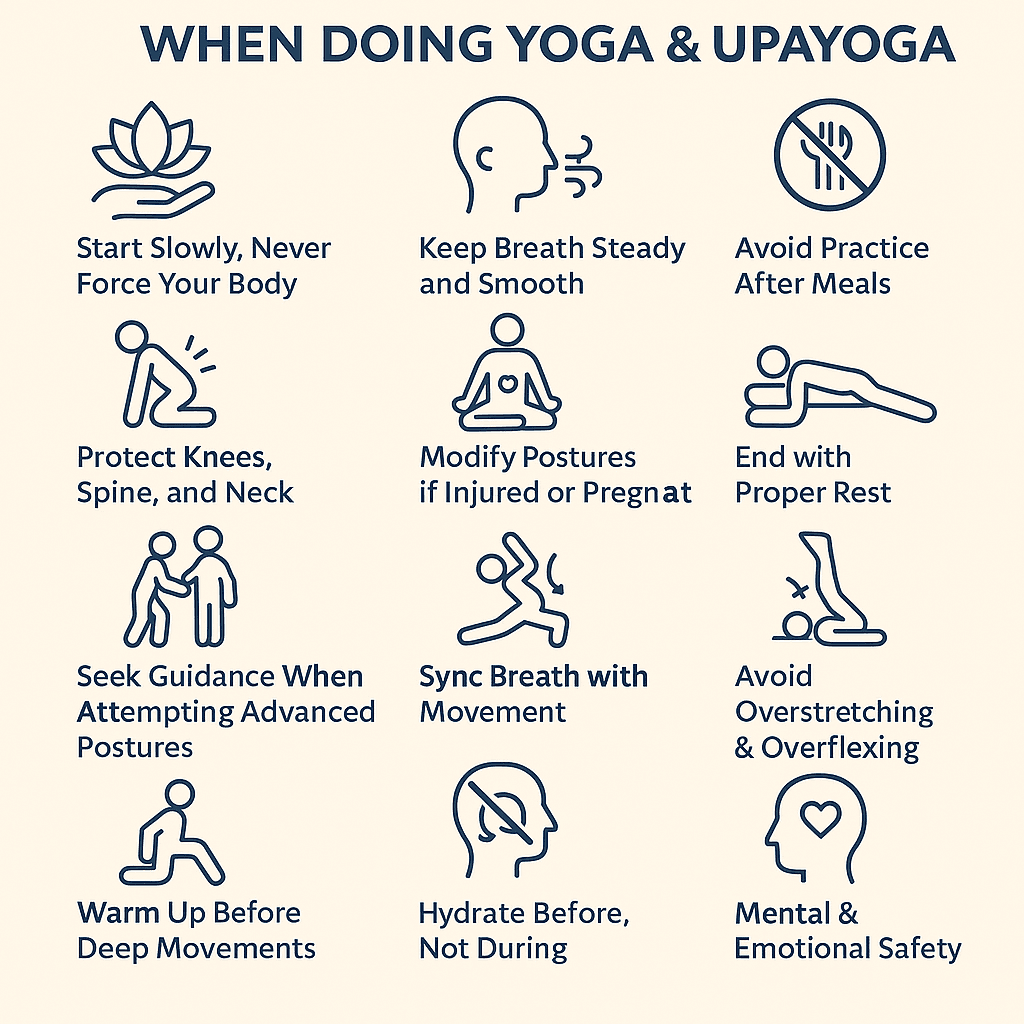
Safety Summary
✔Start slowly, never force your body
✔Keep breath steady and smooth
✔Avoid practice after meals
✔Protect knees, spine, and neck
✔Modify postures if injured or pregnant
✔End with proper rest
✔Seek guidance when attempting advanced postures
✔Upayoga is gentler, but awareness is still essential