Breathing Control Techniques
Prāṇāyāma Variants: A Comprehensive Overview for Students & Practitioners
Breathing control in yoga is not accidental — it is a deliberate, scientific method to regulate the autonomic nervous system, balance prāṇa, and prepare the mind for deeper practices like meditation. Below are the major categories and techniques of yogic breath control, explained with precision and purpose.
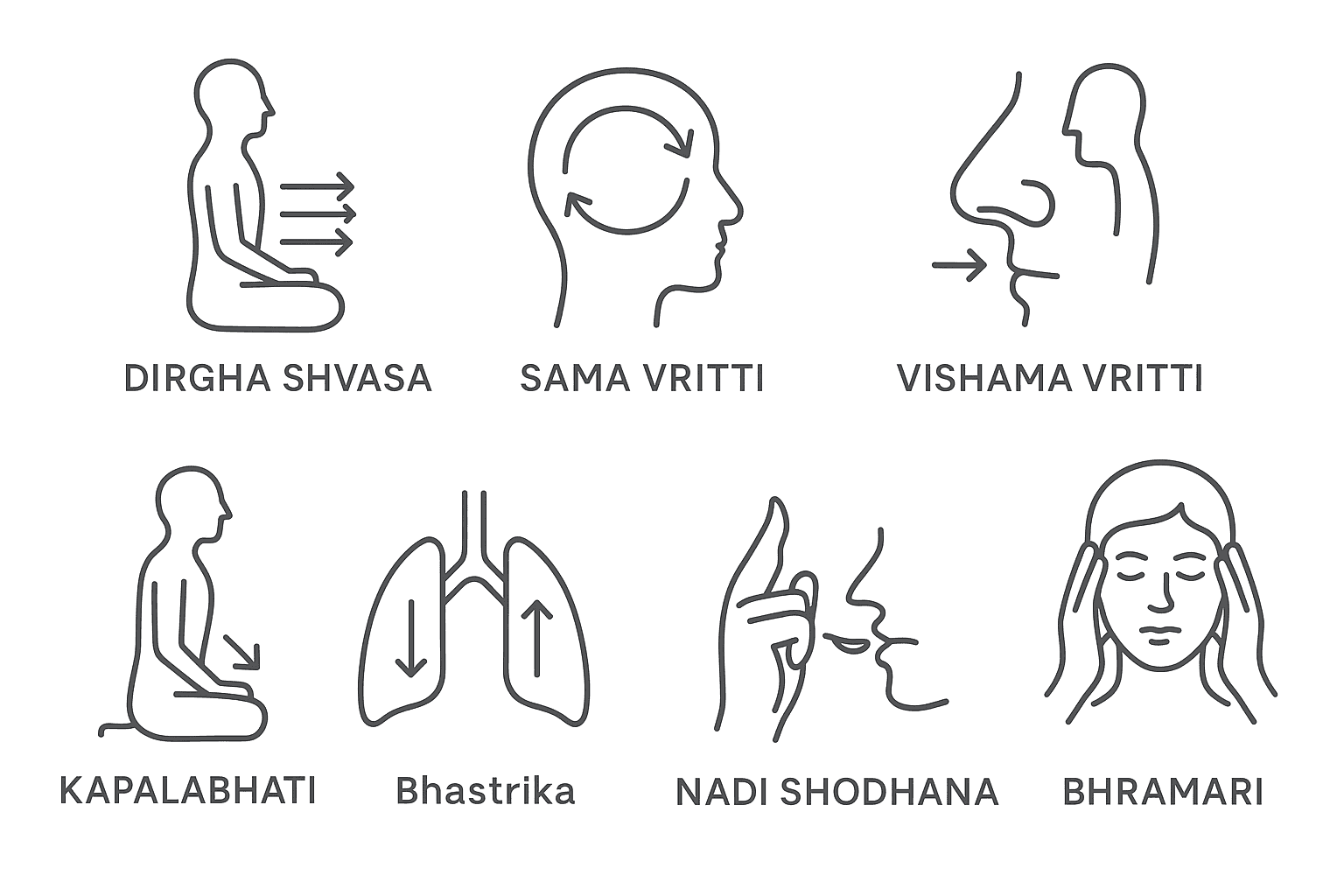
1. Foundational TechniquesBeginner Level
These build awareness, steadiness, and baseline lung capacity.
1.1 Dirgha Shvāsa — Deep Yogic Breathing (3-Part Breath)
Focus: Chest → ribs → abdomen expansion
Benefits:
- Improves lung function
- Reduces anxiety
- Ideal warm-up before all pranayamas
Use for beginners:
Helps students understand diaphragmatic breathing.1.2 Sama Vritti — Equal Ratio Breathing
Pattern: Inhale = Exhale (e.g., 4 seconds in, 4 seconds out)
Benefits:
- Balances sympathetic & parasympathetic systems
- Increases mental steadiness
Use:
Best for students with stress, restlessness, or shallow breathing.1.3 Vishama Vritti — Unequal Ratio Breathing
Pattern: Exhale longer than inhale (e.g., 4 in → 6 out)
Benefits:
- Deep relaxation
- Reduces heart rate
- Helps with insomnia
Use:
Evening practice & pre-meditation calming.2. Cleansing & Energizing TechniquesIntermediate
These activate prāṇa, improve circulation, and energize the system.
2.1 Kapalabhati — Skull-Shining Breath
Pattern: Active exhale (quick, sharp) + Passive inhale
Benefits:
- Clears sinuses
- Stimulates digestion
- Activates solar plexus (Manipura chakra)
- Increases alertness
Caution:
Avoid in hypertension, pregnancy, hernia.2.2 Bhastrika — Bellows Breath
Pattern: Forceful inhale + forceful exhale with equal intensity
Benefits:
- Strong energy booster
- Improves lung power
- Warms the body
Caution:
Not for anxiety-sensitive individuals or cardiac conditions.3. Cooling Techniques (Therapeutic Use)
3.1 Sheetali — Cooling Tongue Breath
Pattern: Roll tongue → inhale through the tube → exhale through nose
Benefits:
- Reduces heat
- Helps anger, acidity, hot climates
3.2 Sheetkari — Hissing Breath
Pattern: Teeth slightly open → inhale through teeth → exhale through nose
Benefits:
- Similar cooling effect
- Useful when tongue cannot be rolled
3.3 Chandra Bhedana — Left Nostril Breathing
Pattern: Inhale left → exhale right
Benefits:
- Calms, cools, lowers heart rate
- Good for anxiety and insomnia
4. Balancing Techniques (Core Prāṇāyāma Practices)
4.1 Nadi Shodhana — Alternate Nostril Breathing
Pattern: Inhale left → exhale right → inhale right → exhale left
Benefits:
- Purifies nadis
- Balances hemispheres of brain
- Deep mental clarity
This is the most important pranayama for emotional balance.
4.2 Anuloma Viloma — Ratio-Based Alternate Nostril Breathing
Pattern: Uses time ratios (e.g., 4-16-8)
Benefits:
- Strengthens nervous system
- Improves breath-holding capacity
- Leads to subtle inner awareness
Often taught after Nadi Shodhana mastery.
5. Retention-Based TechniquesAdvanced
Kumbhaka = breath retention
Must be taught slowly and carefully.
5.1 Antar Kumbhaka — Internal Retention
Pattern: Inhale → hold → exhale
Benefits:
- Builds lung capacity
- Strengthens mind control
- Heightens pranic pressure
5.2 Bahya Kumbhaka — External Retention
Pattern: Exhale → hold
Benefits:
- Strong parasympathetic activation
- Deep stillness
- Used in advanced hatha yoga
5.3 Kevala Kumbhaka — Spontaneous Retention
A natural, effortless suspension of breath in deep meditation.
This is not practiced; it emerges naturally with mastery.
6. Sound-Based Techniques (Calming & Meditative)
6.1 Ujjayi — Victorious Breath
Pattern: Slight constriction at the throat (ocean sound)
Benefits:
- Builds focus
- Warms the body
- Used heavily in Ashtanga Vinyasa and meditation
6.2 Bhramari — Humming Bee Breath
Pattern: Inhale → exhale with humming sound
Benefits:
- Reduces anger, anxiety
- Improves sleep
- Vibrations calm the limbic system
7. Advanced Yogic Techniques (Subtle Body Work)Advanced
Used in serious yoga sadhana and energy practices.
7.1 Surya Bhedana — Right Nostril Breathing
Pattern: Inhale right → exhale left
Benefits:
- Generates heat
- Activates Pingala Nadi
- Increases alertness
7.2 Moorcha, Plavini, and Other Rare Pranayamas
- Alter consciousness
- Used in advanced ritual and meditative practices
- Taught only under direct supervision
8. Safety & Contraindications (Important for Teaching)
- No breath retentions in hypertension, pregnancy, cardiac issues
- Avoid forceful practices in anxiety, panic disorder
- Asthmatic students should practice slow breathing, not Kapalabhati/Bhastrika
- Always begin with normal breathing and end with relaxation