Scientific references about yoga
Exploring the connection between cellular aging, telomerase activity, and yoga practices.
Yoga and meditation, particularly practices like Sudarshan Kriya Yoga (SKY), heartfulness meditation, mindfulness, have been shown in studies to potentially slow down cellular aging by increasing telomerase activity and preserving or lengthening telomeres. These practices reduce chronic stress, cortisol levels, and inflammation, which are known to accelerate telomere shortening. Studies have demonstrated that consistent, long-term meditation practice is linked to longer telomeres, with some research indicating a 12-week intervention can show improvements in telomere length.
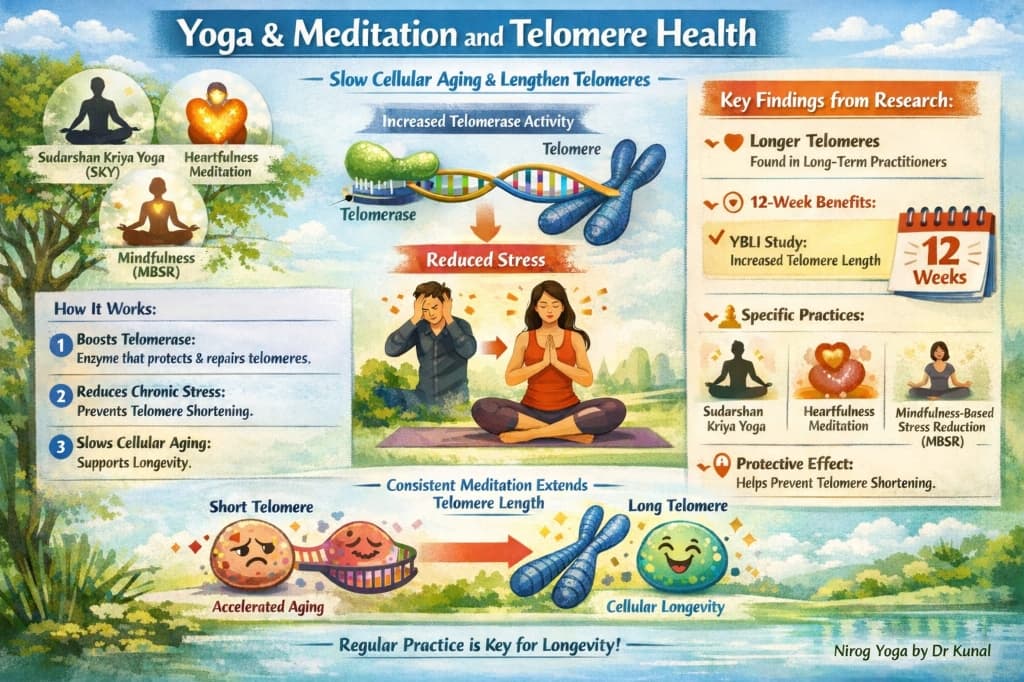
🧬 Mechanism
Yoga and meditation significantly increase telomerase activity, an essential enzyme responsible for maintaining and repairing telomere length. By protecting chromosomal ends, this activity fundamentally slows down the process of cellular senescence and aging.
🛡️ Impact of Stress
Chronic psychological stress, inflammation, and oxidative damage are primary drivers of accelerated telomere shortening. Mindfulness practices physically mitigate these factors by lowering cortisol levels and improving neuroendocrine and emotional regulation.
⏳ Longevity Markers
Clinical trials consistently show that long-term practitioners of yoga or meditation possess longer telomeres and demonstrate higher telomerase activity compared to control groups, marking these practices as tangible pathways to cellular longevity.
🧘 Specific Practices
Targeted disciplines like Sudarshan Kriya Yoga (SKY), Heartfulness meditation, and Mindfulness-Based Stress Reduction (MBSR) have all independently shown positive, measurable effects on telomere health and overall resilience.
🔬 Findings in Studies
While a 12-week yoga-based lifestyle intervention (YBLI) has shown significant initial improvements in telomere length, researchers emphasize the necessity of consistent, long-term practice and mindful integration to maintain these lasting protective effects.
Note: While some studies show promising results, others indicate that while yoga may not always cause significant lengthening, it can act as a protective measure against the shortening of telomeres. Further research is needed to determine the most effective types and durations of practice.
References
- Yoga and Telomeres: A Path to Cellular Longevity?Evidence suggests that meditation may affect telomere dynamics by reducing stress and inflammation and improving emotional regulation.
- A Narrative Review of Telomere Length Modulation Through Diverse Yoga and Meditation StylesMindfulness practices have demonstrated the potential to positively impact various aspects of human health associated with telomere length (TL).
- Yoga and Telomeres: A Path to Cellular LongevityExplores how yoga practices protect chromosomal ends by reducing oxidative damage and stress levels.
- Mindfulness and Telomere Maintenance (PMC)Open-access evidence on how mindfulness practices relate to telomere maintenance and stress biology.
- PubMed: Yoga Practice and Telomere LengthClinical research indicating improvements in cellular biomarkers with consistent meditation routines.
- Frontiers in Psychology: Yoga-Based InterventionsReview of various mind-body therapies and their positive correlation with cellular longevity and healthspan.
- Alternative Therapies: Meditation and AgingAssessing the mechanism behind stress reduction techniques in mitigating telomere attrition over time.
- International Journal of Research in Medical SciencesOutlines specific yoga protocols that demonstrate measurable preservation of telomere length in adults.
- Implication of Asana, Pranayama and Meditation on TelomeresInvestigates how combining physical postures with breathwork leads to improved cellular aging markers.
- PMC: Mindfulness and Telomere MaintenanceAnalyzes the dose-response relationship between regular mindfulness-based stress reduction and cellular health.
- Yoga and Telomeres (Cureus article)Discusses the potential of yoga as a therapeutic strategy to improve longevity and prevent age-related diseases.